Acne scars in men: what treats them and when to start
Quick answer: The American Academy of Dermatology (AAD) says acne scars can fade, but they rarely go away completely on their own. The AAD’s treatment page says scar treatment typically begins after you have acne under control and are applying acne medication to prevent new breakouts. It lists different treatments for depressed and raised scars. For isotretinoin, the Accutane Medication Guide says not to have cosmetic procedures to smooth your skin while you take it and for at least 6 months after you stop. Those include waxing, dermabrasion and laser procedures.
This article walks through what counts as an acne scar, how a man can limit new ones, which treatments the AAD lists, and how isotretinoin changes the timing.
The Goal Is Clear is one place to start the acne part online. Board-certified dermatologists licensed in your state review acne cases through the service, and BruhRX is the path built for men. Our men’s acne FAQ says options may include prescription topicals, oral antibiotics, or Accutane® with an iPledge concierge when the dermatologist agrees it’s a fit. Scar procedures aren’t on that list.
What counts as an acne scar in men?
The AAD says scars that form after acne clears are called acne scars, and not every acne breakout causes a scar. It also says most people develop acne scars that leave depressions in the skin. When an acne scar first appears, the AAD says you may see a depression or a raised scar, along with some discoloration.
Not every mark is a scar. The AAD’s scar overview says a flat spot of color on your skin when acne clears usually isn’t an acne scar. It says that mark is likely post-inflammatory hyperpigmentation (PIH).
The same AAD page says the discoloration usually goes away over time, but the scar remains. The AAD also says acne scars can fade, but they rarely go away completely on their own.
How do men stop new acne scars from forming?
Prevention starts with the acne itself. The AAD advises you to treat acne when you first notice it and continue treatment, and it says preventing acne can prevent acne scars.
Why shouldn’t you pick or squeeze?
The AAD says that when you pop or squeeze acne, you’re likely to push pus, dead skin cells or bacteria deeper into your skin. That increases inflammation and can lead to more-noticeable acne and sometimes scarring and pain. Its advice is to resist the temptation and treat your acne with acne medication. For deep or painful acne, the AAD says seeing a dermatologist is necessary to help clear it.
How should you shave over breakouts?
Shaving can matter when you have breakouts, and the AAD addresses it directly. It says men who have acne should take special care while shaving, because shaving can irritate your skin and make acne worse.
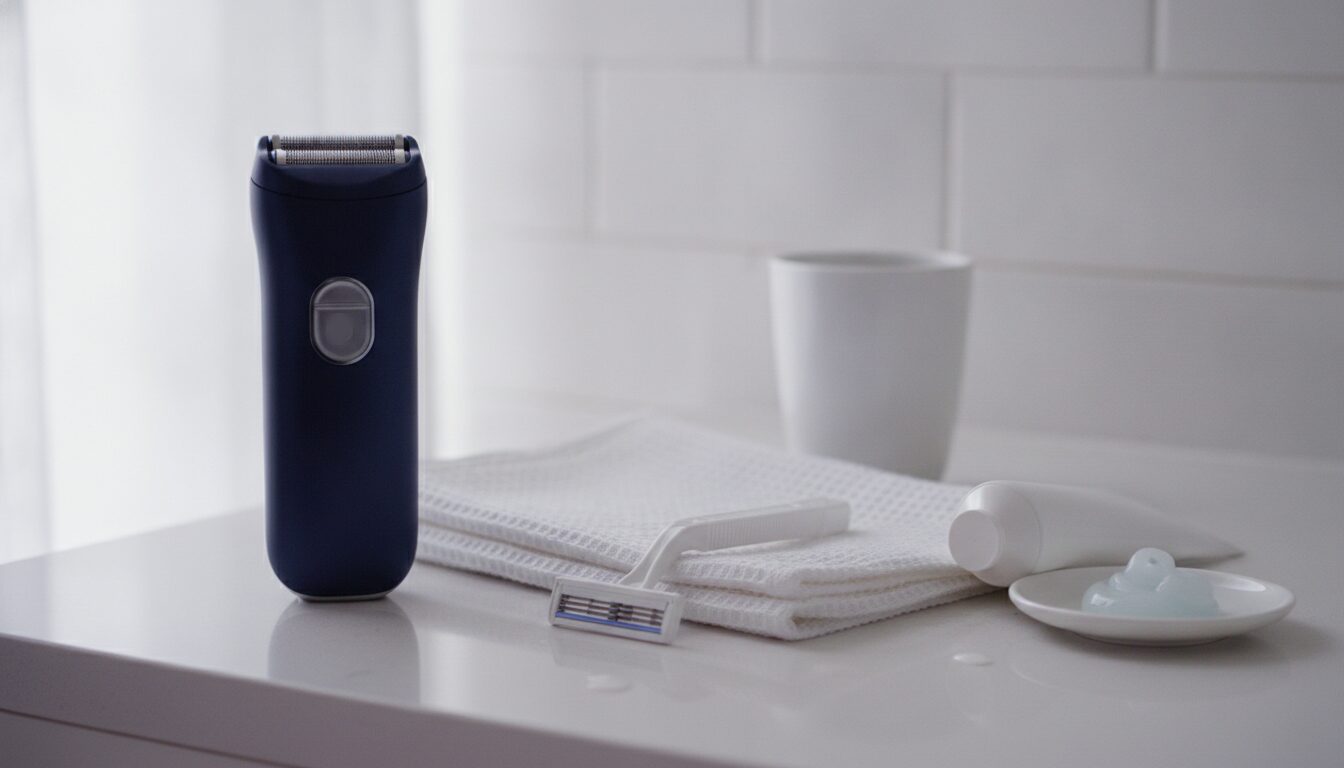
The AAD’s tips for men with acne are short. If you have acne on your face, try electric or disposable blade razors to see which work for you. Use a razor with a sharp blade. Shave lightly to prevent nicks, and never try to shave off the acne, since the AAD says both can make acne worse.
The AAD’s general shaving routine applies too. Wet your skin and hair first to soften it, apply a shaving cream or gel, shave in the direction the hair grows, and rinse after each swipe. The AAD also says to change your blade or throw away disposable razors after 5 to 7 shaves, and to store your razor in a dry area.
Which acne treatments does the AAD guideline back?
The AAD’s 2024 acne guideline gives strong recommendations to benzoyl peroxide, topical retinoids, topical antibiotics and oral doxycycline. It also says oral isotretinoin is strongly recommended for acne that is severe, causing psychosocial burden or scarring, or failing standard oral or topical therapy.
Spironolactone isn’t part of that choice for men. The AAD says spironolactone isn’t prescribed to treat acne in men because of side effects.
What can a dermatologist do for acne scars?
The AAD’s treatment page says scar treatment typically begins after you have acne under control and are applying acne medication to prevent new breakouts. It also says starting some scar treatments while using, or soon after stopping, certain acne medications can cause unwanted side effects. For depressed (sunken) scars, that page lists the options below.
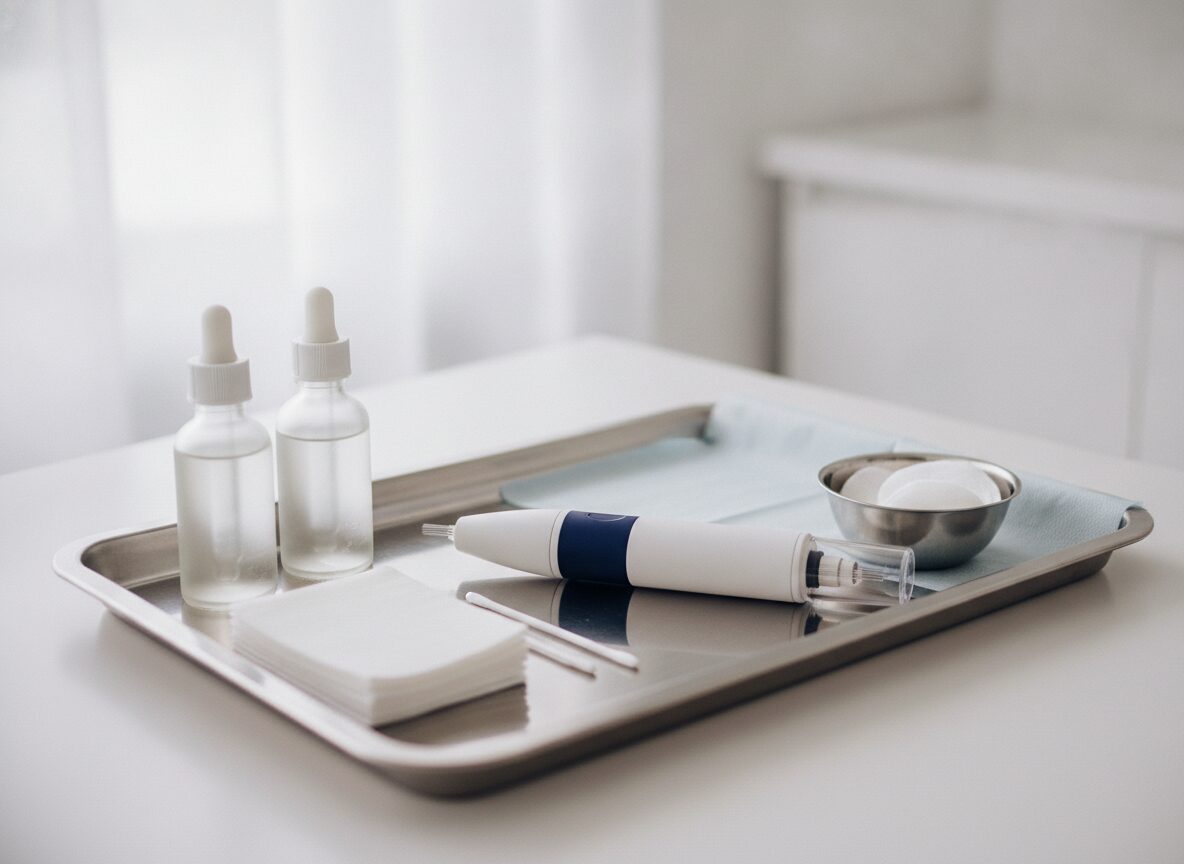
- Chemical peels: the AAD says peels are available in strengths ranging from mild to strong.
- Fillers: the AAD says most fillers give temporary results, ranging from 3 months to 2 years.
- Lasers: the AAD says dermatologists use lasers to resurface skin with acne scars.
- Microneedling: the AAD says microneedling is safe for all skin tones.
- Platelet-rich plasma (PRP): the AAD says studies show PRP along with another treatment like microneedling can lead to less visible scarring.
- Radiofrequency: both radiofrequency and radiofrequency microneedling are safe for all skin tones, per the AAD.
- Scar surgery: the AAD says dermatologists can perform minor surgery to diminish noticeable acne scars.
- Dermabrasion: the AAD says it’s a surgical procedure that dermatologists use to deeply exfoliate the skin.
Raised scars get a different plan. For raised scars called hypertrophic scars, the AAD says a dermatologist may recommend laser treatments, injections of corticosteroids or another medication, or applying a prescription medication to the scar.
Two practical points come from the same AAD page. It says medical insurance does not cover the cost, and some treatments require downtime. Ask about both before you book, since downtime on your face can collide with work or events.
What should you tell a dermatologist first?
Before you start treating acne scars, the AAD says to tell your dermatologist about all acne treatments you are using or have used within the last two years. Bring that list, including any isotretinoin course and the date of your last dose. The AAD also suggests asking yourself what you can spend and how much downtime you can afford before you book a consultation.
Can you have scar treatment after Accutane?
The label answers this with a waiting period. The Accutane Medication Guide on DailyMed says not to have cosmetic procedures to smooth your skin while you are using Accutane and for at least 6 months after you stop. Those include waxing, dermabrasion and laser procedures. It says Accutane can increase your chance of scarring from these procedures. It also says to check with your doctor for advice about when you can have cosmetic procedures.
MedlinePlus gives a similar 6-month window for waxing, laser skin treatments and dermabrasion, and says to ask your doctor when you can safely undergo these treatments.
A 2017 JAMA Dermatology review found a different picture in the research. Its authors reported insufficient evidence to support delaying several procedures for patients on or recently off isotretinoin. Those included superficial chemical peels and fractional ablative and nonablative laser procedures. The same review said mechanical dermabrasion and fully ablative laser are not recommended in the setting of systemic isotretinoin treatment. That review isn’t permission to skip the label’s wait. Its conclusion is that physicians and patients may have an evidence-based discussion about the risk. The Medication Guide’s wait of at least 6 months still stands, and it says to check with your doctor for advice about timing.
When does the six months start?
The Medication Guide counts the wait of at least 6 months from when you stop taking Accutane. From running isotretinoin logistics, we see patients in the final month stop managing the details early, and the last refill can lapse before pickup. So write down the day you actually take your last dose and give it to your dermatologist. Then check with your doctor for advice about when you can have cosmetic procedures.
How does isotretinoin relate to scarring?
The Accutane label says it is indicated for the treatment of severe recalcitrant nodular acne. The label adds that it should be reserved for patients with severe nodular acne who are unresponsive to conventional therapy, including systemic antibiotics. The AAD’s 2024 guideline, a separate source, strongly recommends oral isotretinoin for acne that is severe, causing psychosocial burden or scarring, or failing standard oral or topical therapy. Our FAQ puts it plainly: Accutane® is an acne treatment, not a scar treatment. Whether a course fits your acne is a call your dermatologist makes.
MedlinePlus says all patients, including men, can get isotretinoin only if they are registered with iPLEDGE. As of October 28, 2026, the FDA’s iPledge page describes two risk categories in use since December 13, 2021. Those are patients who can get pregnant and patients who cannot get pregnant. The January 2026 Medication Guide says your doctor will have you sign the Patient Enrollment Form for Patients who cannot get Pregnant. Patients who can get pregnant also sign another form. Our Accutane for men post covers iPledge, labs and each month of a course.
Labs are part of a course, too. The label calls for pretreatment and follow-up blood lipids and liver function tests. From running lab logistics, we know the lab requisition is a separate document from the visit note, and patients arrive at the draw site with the wrong paper. Check which page you were given before you leave the house.
What should you do before and after a scar consult?
Treat the order as a checklist. First, treat the acne, because the AAD says scar treatment typically begins after acne is under control and you’re applying acne medication. Second, resist the temptation to pop or squeeze acne, and review your shaving routine against the AAD’s shaving tips. Third, write down every acne treatment you’ve used in the last two years with dates, since the AAD asks you to share them. Fourth, ask the dermatologist which scar type you have and which procedures fit it.
If you took isotretinoin, add your last dose date. The Medication Guide’s wait of at least 6 months covers cosmetic procedures to smooth your skin, including waxing, dermabrasion and laser procedures. Ask your doctor when you can have the procedure you want.
Where does The Goal Is Clear fit?
We cover the acne-control step online. Per our how it works page, a board-certified dermatologist licensed in your state reviews your case, and you see their name, photo and state license number before treatment starts. TGIC doesn’t use nurse practitioners or physician assistants to diagnose acne or write prescriptions. Our about page adds that if telehealth is not the right fit, your clinician can route you toward in-person care.
The men’s acne FAQ lists the triggers for a step up: topicals are not enough, or acne is moderate to severe, scarring, or repeatedly failing appropriate care. Then your dermatologist may consider oral antibiotics (usually time-limited) or Accutane®. Our Accutane® FAQ says every Accutane® patient gets an iPledge Concierge. Our iPledge FAQ says TGIC’s iPledge concierge tracks every window, test, and refill for you. The cost split is on the Accutane cost page and our pricing page. Some eligible insured patients pay as low as $0 for the prescription. You can also read whether Accutane helps with scars.
Common questions about acne scars in men
Do acne scars go away on their own? The AAD says acne scars can fade, but they rarely go away completely on their own. It adds that a flat spot of color left when acne clears usually isn’t an acne scar.
When should a man start treating acne scars? The AAD says scar treatment typically begins after you have acne under control and are applying acne medication to prevent new breakouts. A dermatologist can then discuss which scar treatments fit.
Does insurance cover acne scar treatment? The AAD says medical insurance does not cover the cost. Ask your dermatologist’s office for the price of any procedure and for the downtime before you book.
Can I get laser or waxing after Accutane? The Medication Guide says not to have cosmetic procedures to smooth your skin while you are using Accutane and for at least 6 months after you stop. Those include waxing, dermabrasion and laser procedures. It says to check with your doctor for advice about when you can have them.
How should I shave with active acne? The AAD says men who have acne should take special care while shaving. Use a sharp blade, shave lightly, shave in the direction the hair grows, and never try to shave off the acne.
What is the next step for acne scars in men?
The AAD says to treat your acne with acne medication, and men with acne should take special care while shaving. Before scar treatment, the AAD says to tell your dermatologist about all acne treatments you’ve used within the last two years. If isotretinoin is part of your history, bring your last dose date. To start with a dermatologist review of active acne, take the quiz, which takes about two minutes. A prescription is never guaranteed, and the dermatologist makes that call.
This article is general information, not medical advice. A prescription is never guaranteed, and treatment decisions stay with the board-certified dermatologist who reviews your case. Accutane® is a registered trademark of its respective owner, and isotretinoin is the generic name. The Goal Is Clear is operated by BNG Health Services, LLC, which is not the prescribing physician; independent board-certified dermatologists prescribe.
Sources
- American Academy of Dermatology, Acne scars: Overview
- American Academy of Dermatology, Acne scars: Consultation and treatment
- American Academy of Dermatology, Hair removal: How to shave
- American Academy of Dermatology, 10 skin care habits that can worsen acne
- American Academy of Dermatology, Stubborn acne? Hormonal therapy may help
- Reynolds et al., Guidelines of care for the management of acne vulgaris, J Am Acad Dermatol 2024
- Spring et al., Isotretinoin and Timing of Procedural Interventions, JAMA Dermatol 2017
- Accutane (isotretinoin) prescribing information and Medication Guide, DailyMed
- MedlinePlus, Isotretinoin
- U.S. Food and Drug Administration, iPLEDGE Risk Evaluation and Mitigation Strategy (REMS)
General information from published sources, not medical advice. Your dermatologist makes every treatment decision after reviewing your case. The Goal Is Clear is operated by BNG Health Services, LLC, which is not the prescribing physician.
← Blog Home