Adult acne in men: treatment steps and how long each one takes
Quick answer: Adult acne treatment for men works as a ladder you climb one rung at a time. Start with one drugstore product with adapalene, benzoyl peroxide, or salicylic acid, used alone for 6 to 8 weeks, per an American Academy of Dermatology page. If it isn’t helping, a dermatologist can add prescription topicals, a time-limited oral antibiotic, or isotretinoin for severe, scarring, or treatment-resistant acne.
This article is for men past their teens whose acne hasn’t stopped. It covers why acne lasts into adulthood, what can pass for acne in a man who shaves, and how long to give each step.
The Goal Is Clear runs an acne care service with a path for men called BruhRX, so we have a stake here. Every medical claim below is sourced, and plenty of men won’t need us at all. BNG Health Services, LLC operates the brand and is not the prescribing physician.
Why do men still get acne after 25?
Men still get acne after 25 because the things that drive it don’t stop at a birthday. The American Academy of Dermatology’s adult acne page says some adults continue to get acne well into their 30s, 40s, and even 50s. It adds that acne can even show up for the first time as an adult, which dermatologists call adult-onset acne.
The same page says women tend to get adult acne more often than men do. It lists fluctuating hormone levels, stress, family history, hair and skin care products, medication side effects, and undiagnosed medical conditions as likely reasons. On stress, the academy explains that the body makes more androgens in response, and those hormones stimulate the oil glands and hair follicles.
MedlinePlus lists certain medicines, including steroids and testosterone, among the things that can trigger acne. If you’re on a prescribed medicine and suspect it, the academy says to keep taking it and talk with the doctor who prescribed it. We’ve covered testosterone, gym supplements, and androgens in more depth in our article on hormones and acne in men.
MedlinePlus warns that scarring may occur when severe acne isn’t treated, so waiting it out can carry a risk of scarring.
Is it acne, or something that looks like acne?
A bump on a man’s face isn’t always acne, and the right treatment depends on what it is. The American Academy of Dermatology’s page on how dermatologists treat acne says hidradenitis suppurativa, perioral dermatitis, and a skin infection called folliculitis can each be mistaken for acne. For men who shave, train, or style their hair, two look-alikes and two acne types with everyday triggers are worth checking.
Razor bumps are the first look-alike a man should check. The academy’s page on razor bump remedies says they develop when the razor cuts hairs short and coarse, curly hairs can curve back into the skin. It says these bumps are especially common in men with darker skin tones, and the medical name is pseudofolliculitis barbae.
Rosacea is the second look-alike to check. The academy’s page on acne look-alikes says rosacea’s acne-like breakouts usually appear where your face is red. It adds that the skin tends to be very sensitive and may sting or burn, and the eyes may feel gritty.
The first acne type with an everyday trigger comes from your gear. The academy calls it acne mechanica, and it forms when equipment or clothing traps heat and sweat while it rubs your skin. The academy lists the plastic on weightlifting benches and the weightlifting belt among the culprits. It says the first sign may be small, rough bumps you can feel more easily than see.
Product acne is the second type, and it can show up along the hairline. The academy’s page on hair care products and acne says oily styling products, such as pomade, can cause breakouts along the hairline and forehead. It also notes that even shaving creams and aftershave can contain oil. Once you stop the product, the academy says it can take 4 to 6 weeks for that acne to clear.
What should a man try first for adult acne at home?
Try one over-the-counter product with a dermatologist-recommended active ingredient, and use it alone for 6 to 8 weeks. That’s the advice on the American Academy of Dermatology’s page about adult acne treatment dermatologists recommend. The page says many adults with mild acne can treat it with nonprescription products, and it names four ingredients that dermatologists suggest for mild to moderate adult acne.
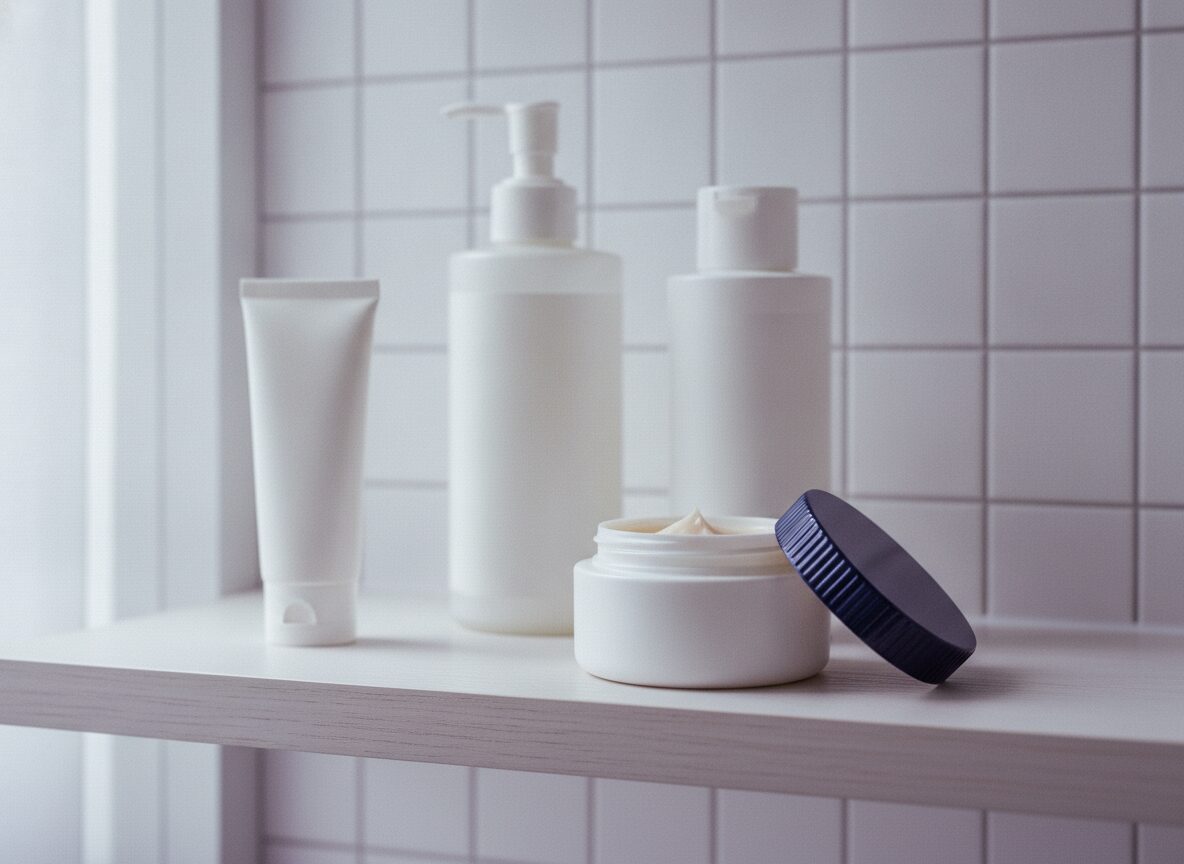
- Adapalene, a retinoid that helps clear blackheads, whiteheads, and pimples.
- Azelaic acid, which fights acne and can fade the dark spots a pimple leaves.
- Benzoyl peroxide, starting at 2.5% to help avoid dry, irritated, or burning skin.
- Salicylic acid, which the page says suits whiteheads and blackheads.
The same page says to put a thin layer over all the skin where you break out, not just on the spots you can see. If the product works, it says to expect fewer breakouts in 4 to 8 weeks and clearing about 16 weeks after you started. A separate academy page on acne that won’t clear is a little quicker, and suggests adding a second product after 4 to 6 weeks with no improvement. That second product should work on a different cause of acne.
If your acne is mild and these products work, you may never need a prescription, and that’s a good outcome. The academy also says large, painful pimples deep in the skin, or acne that scars, need a dermatologist. Store products are unlikely to treat those types effectively.
How should you shave, groom, and train while treating adult acne?
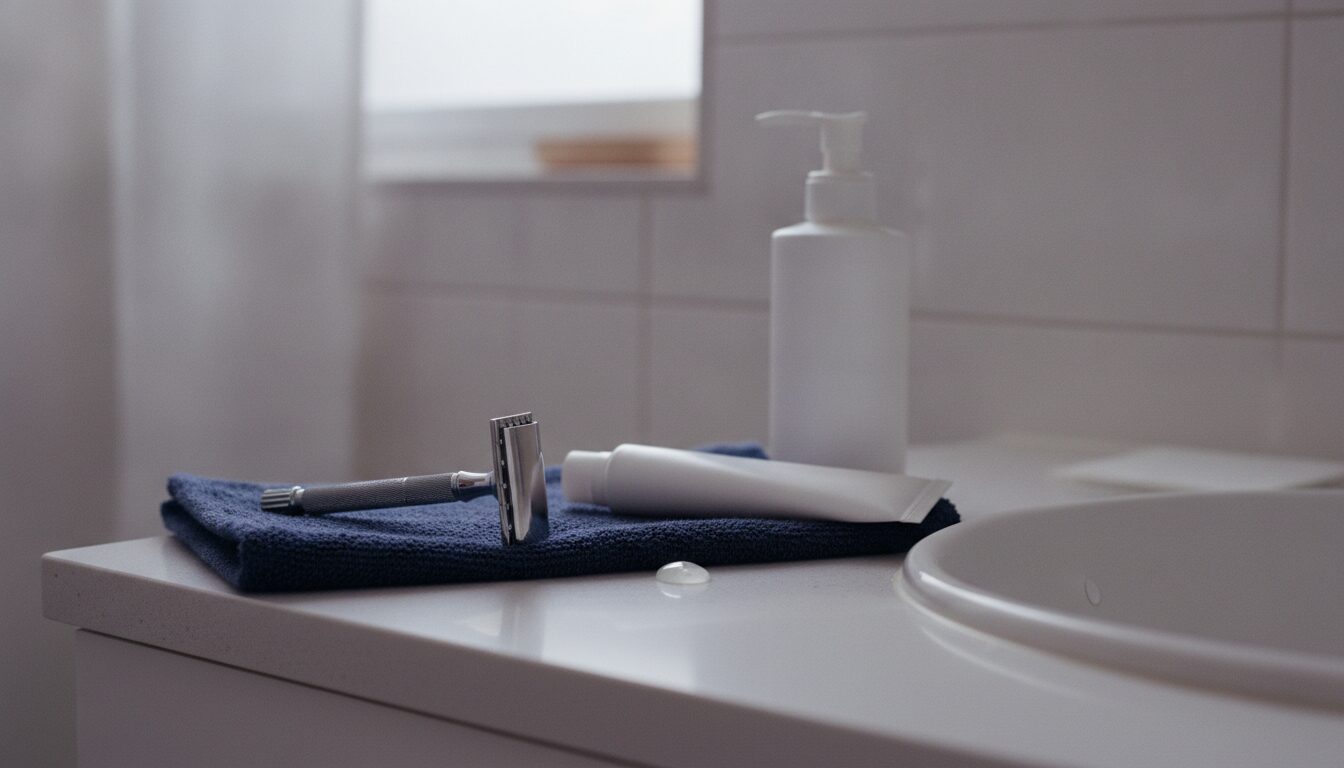
Shave gently, keep oily products off acne-prone skin, and wash after you sweat. The American Academy of Dermatology’s page on how to shave says men with acne should take special care, because shaving can irritate the skin and make acne worse. It suggests trying electric and disposable blade razors to see which works better for your face.

The same page says to use a sharp blade and shave lightly, and never to try to shave off the acne. It recommends shaving in the direction the hair grows to help prevent razor bumps. It also says to change your blade or toss a disposable razor after 5 to 7 shaves.
If you keep a beard, the skin underneath still needs care. The academy’s beard care page says to wash your face and beard every day. For oily skin or acne, it suggests a gel cleanser with salicylic acid or glycolic acid that says non-comedogenic on the label.
The gym deserves its own routine. The academy’s page on acne from workouts says to wear workout clothes that have been washed since you last wore them. It says to pat sweat away with a clean towel, wipe down shared equipment first, and consider showering right after the workout.
The academy’s acne care tips advise a broad-spectrum, water-resistant sunscreen with SPF 30 or higher that won’t clog pores. It says picking and popping slow healing and raise the risk of scars and dark spots.
What does a dermatologist add when drugstore products stop working?
A dermatologist can add prescription treatments and combine medicines that work in different ways. The American Academy of Dermatology’s 2024 acne guideline makes strong recommendations for benzoyl peroxide, topical retinoids, topical antibiotics, and oral doxycycline. Its good practice statements include combining topicals that work in different ways and limiting systemic antibiotic use.
The academy’s treatment page names prescription retinoids such as tretinoin, tazarotene, and trifarotene. It also lists combination medicines that pair a retinoid or an antibiotic with benzoyl peroxide, or a retinoid with an antibiotic. The academy says a topical antibiotic is used along with benzoyl peroxide to lower the risk of antibiotic resistance.
One prescription topical targets the hormonal side of acne, and men can use it. The academy says clascoterone (Winlevi) is the first FDA-approved medication that can treat the hormonal causes of acne in both males and females. It’s approved for moderate to severe acne in people 12 and older and is applied twice a day. The 2024 guideline gives clascoterone a conditional recommendation, so it’s a choice your dermatologist weighs case by case.
For moderate to severe acne, the academy says a dermatologist may prescribe an oral antibiotic for the shortest time needed, usually several months. Another medicine, such as benzoyl peroxide, goes alongside it. The academy notes that the FDA has approved doxycycline, minocycline, and sarecycline for acne. For a single large, painful bump, the academy says a dermatologist may inject a corticosteroid, a step reserved for a few severe breakouts.
Spironolactone generally isn’t one of the men’s options. The academy states that spironolactone is generally only a treatment for women, and that in men possible side effects include developing breasts and erectile dysfunction. Our men’s acne FAQ also says spironolactone is generally not used for men for acne, and that the dermatologist will choose other options.
Give a prescription plan time before you judge it. The academy says it takes at least 6 to 8 weeks before you start to see fewer breakouts. It also says that using only some of what your dermatologist prescribed could be the reason you still have acne.
When does isotretinoin come into adult acne treatment for men?
Isotretinoin comes in when acne is severe, scarring, weighing on you, or not clearing with standard treatment. The 2024 guideline strongly recommends oral isotretinoin for acne that is severe, that causes psychosocial burden or scarring, or that fails standard oral or topical therapy.
Unlike a cream, an isotretinoin course runs for a defined stretch of months. The Accutane® prescribing information says a single course of 15 to 20 weeks has been shown to result in complete and prolonged remission in many patients. The American Academy of Dermatology’s isotretinoin page puts one course at about four to five months, tailored to each patient. The label adds that a second course may be started after 2 months or more off therapy if severe nodular acne persists or returns and retreatment is warranted.
If isotretinoin is prescribed, the academy’s isotretinoin page says your dermatologist will enroll you in iPLEDGE REMS, a risk-management program the FDA runs. As of October 9, 2026, the labeling says a patient who cannot become pregnant must get the prescription within 30 days of the office visit. The FDA’s iPLEDGE page says approved changes will remove that 30-day window for patients who cannot get pregnant. They will also end monthly counseling documentation for that group. Those changes don’t take effect until November 15, 2026, so the current rules apply until then.
Our iPledge FAQ says patients who cannot get pregnant have no monthly test or form of their own. It adds that until November 15, 2026, their prescriber confirms counseling in iPLEDGE each month, and that month’s prescription can’t be released until that step is done. A few logistics snags show up on the service side. The lab requisition is a separate document from the visit note, and patients sometimes show up at the draw site with the wrong paper. A missed iPledge window doesn’t generate a warning email, so the dates need a system that tracks them.
The last month catches people too, because the course isn’t over until someone picks up the final fill. If side effects are your worry, our article on side effects of Accutane® for men goes through the label language.
How does the BruhRX path work for adult acne?
BruhRX is The Goal Is Clear’s acne path for men, and a board-certified dermatologist licensed in your state reviews your case. Our men’s FAQ states that the company “does not use nurse practitioners or physician assistants for acne diagnosis or prescription decisions”. It says options may include prescription topicals, oral antibiotics, or Accutane® with an iPledge concierge when the dermatologist agrees it’s a fit.
You take a short quiz, upload photos of your skin, and choose a Clear Course plan. A board-certified dermatologist licensed in your state reviews your case within 24 hours, and you see their name, photo, and license before treatment starts. Even after that review, a prescription is never guaranteed. When treatment is prescribed, the partner pharmacy runs your insurance when you have it, then fills and ships the medication.
The Clear Course is cash-pay, labs for Accutane® are billed separately, and some eligible insured patients pay as low as $0 for the prescription (coverage varies). Plan prices are on the pricing page, and our page about what Accutane® costs explains that medication and labs are billed separately. For men on Accutane®, the iPledge Concierge tracks windows, testing cadence, and refill timing. Care is available in all 50 states plus Guam when clinically appropriate, with eligibility confirmed at intake.
Common questions about adult acne treatment for men
What is the first adult acne treatment a man should try? A single drugstore product with adapalene, benzoyl peroxide, salicylic acid, or azelaic acid is the first step the American Academy of Dermatology describes. The American Academy of Dermatology says to use one product for 6 to 8 weeks without adding another.
How long does adult acne treatment take to work for men? Expect it to take weeks, not days. The American Academy of Dermatology says a working nonprescription product brings fewer breakouts in 4 to 8 weeks and clearing at about 16 weeks. For a dermatologist’s plan, it says to allow at least 6 to 8 weeks before you start seeing fewer breakouts.
Can shaving cause acne or make it worse? Shaving can irritate the skin and make acne worse, according to the American Academy of Dermatology. It suggests a sharp blade, a light touch, and never trying to shave off a pimple. Razor bumps, which can form when shaved coarse, curly hairs curve into the skin, are an acne look-alike, not acne itself.
Is spironolactone used for adult acne in men? Spironolactone generally isn’t used for men. The American Academy of Dermatology says spironolactone is generally only a treatment for women, and that in men possible side effects include developing breasts and erectile dysfunction. The academy names clascoterone as FDA-approved for the hormonal causes of acne in males, and a dermatologist chooses the rest of the plan.
When should a man see a dermatologist about adult acne? See one if self-care and store products haven’t helped after several months, or if you develop scars as acne clears. MedlinePlus lists both of those as reasons to contact a provider.
Which step should you take next?
Match your next step to the rung you’ve already reached. If you haven’t given one recommended product a full 6 to 8 weeks, start there, and set the razor, beard, and gym routine above alongside it. If one product hasn’t helped, the academy suggests adding a second that works on a different cause. Scars, large painful bumps deep in the skin, or months without progress call for a board-certified dermatologist.
If you’d like a board-certified dermatologist to review your case online, take the two-minute quiz or read about getting Accutane® online first.
This article is general information, not medical advice. A prescription is never guaranteed, and treatment decisions stay with the board-certified dermatologist who reviews your case. Accutane® is a registered trademark of its respective owner, and isotretinoin is the generic name. Winlevi is a trademark of its respective owner. The Goal Is Clear is operated by BNG Health Services, LLC, which is not the prescribing physician; independent board-certified dermatologists prescribe.
Sources
- American Academy of Dermatology, Adult acne
- American Academy of Dermatology, Adult acne treatment dermatologists recommend
- American Academy of Dermatology, 9 things to try when acne won’t clear
- American Academy of Dermatology, Acne: Diagnosis and treatment
- American Academy of Dermatology, Is that stubborn acne really acne?
- American Academy of Dermatology, Is sports equipment causing your acne?
- American Academy of Dermatology, Hair care products and acne
- American Academy of Dermatology, How to prevent acne caused by workouts
- American Academy of Dermatology, Acne: Tips for managing
- American Academy of Dermatology, How to shave
- American Academy of Dermatology, Razor bump remedies for men with darker skin tones
- American Academy of Dermatology, A dermatologist’s top tips for a healthy beard
- American Academy of Dermatology, Isotretinoin
- MedlinePlus, Acne
- Reynolds et al., Guidelines of care for the management of acne vulgaris, J Am Acad Dermatol 2024
- Accutane (isotretinoin) prescribing information, DailyMed
- FDA, iPLEDGE Risk Evaluation and Mitigation Strategy (REMS)
Related from The Goal Is Clear
General information from published sources, not medical advice. Your dermatologist makes every treatment decision after reviewing your case. The Goal Is Clear is operated by BNG Health Services, LLC, which is not the prescribing physician.
← Blog Home