How to take Accutane: food, dairy, alcohol and supplements
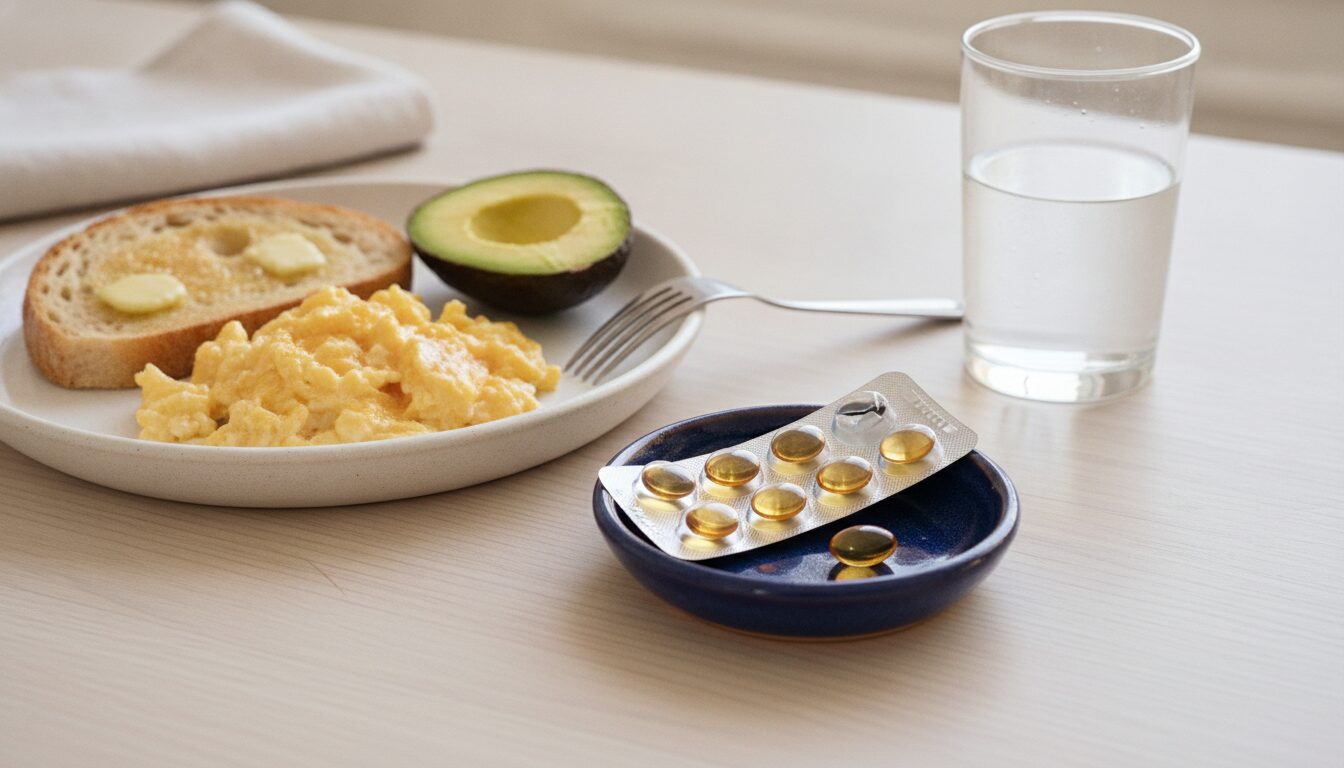
Take Accutane with a meal, and swallow the capsule whole with a full glass of liquid. If you miss a dose, skip it rather than doubling the next one. That is what the FDA label says, and it covers most of the question. The rest of what people ask under Accutane videos is about the details. Is a handful of almonds enough food? Can you still drink whole milk? Is collagen off the table for the whole course? Why not just take vitamin A instead? This page covers how to take Accutane question by question, in the label’s own words. Where the label says nothing, we say so, and your dermatologist makes the call.
Nothing here is a dose or a schedule. Your prescriber sets both, and the label defers to their instructions over its own general guidance. What we add is the fine print, read for you. We also cover the monthly pickup mechanics, which derail more courses than the capsule ever does.
How do you take Accutane the right way?
You take it with a meal, you swallow the capsule whole, and you follow the schedule your dermatologist wrote. The FDA label for Accutane, hosted on DailyMed, puts it in three plain instructions. Take it with a meal unless your doctor tells you otherwise. Swallow the capsules whole with a full glass of liquid. Never chew or suck on them, because a capsule that isn’t swallowed whole can hurt the esophagus.
The label also settles the missed-dose question. If you miss a dose, skip it, and don’t take two doses at the same time. MedlinePlus, the NIH’s patient drug guide, gives the same instruction. It describes isotretinoin as usually taken with meals, for four to five months at a time. Your prescriber decides the dose and the schedule.
Isotretinoin is the drug’s generic name, and Accutane is one brand of it. The label calls it a retinoid, chemically related to retinol, which is vitamin A. That relationship explains half the supplement questions below. It also explains why the American Academy of Dermatology treats this as a serious medication. The AAD’s 2024 acne guideline was written by Reynolds and colleagues in the Journal of the American Academy of Dermatology. It strongly recommends oral isotretinoin for acne that is severe, scarring, causing psychosocial burden, or failing standard treatment.
Why does Accutane have to be taken with food?
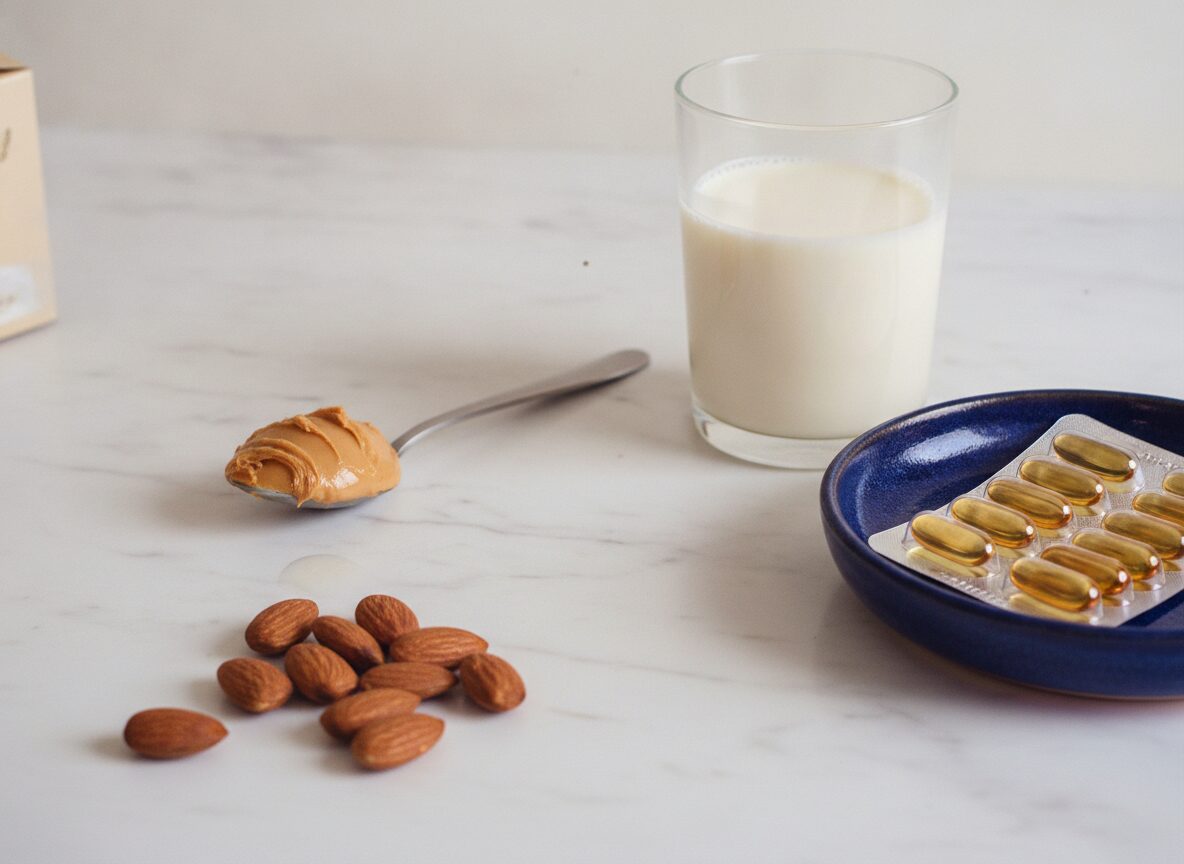
Because the drug dissolves in fat, and the FDA label says more of it gets absorbed when you eat fat with it. The label’s pharmacology section says oral absorption of isotretinoin improves when the drug is given with a high-fat meal. It puts that down to the drug’s high lipophilicity, which means it’s fat-loving, and fat carries it into your bloodstream. The label cites a study where healthy adults took the same dose fasted and fed. Food raised the amount of drug that reached the blood. That is why the label says Accutane should always be taken with food.
Now the almonds question, and the teaspoon of peanut butter. The label never names a food or a gram count, so nobody can promise that a handful of almonds is enough. What the label names is a meal, and the absorption study used a high-fat one. A snack on the way out the door is a different thing from a meal. If the choice is almonds or nothing, almonds have fat in them. If the choice is almonds or breakfast, breakfast is what the label describes. Ask your dermatologist what counts for your prescription when you message them.
Not every isotretinoin capsule follows the same food rule, and the rule is printed on the box, not in a video. The FDA label for Absorica and Absorica LD, two other isotretinoin brands, says those capsules are taken without regard to meals. Their food study found no clinically significant difference between a high-fat meal and fasting. The same label says Absorica and Absorica LD are not substitutable for each other, because they differ in absorption and in dosage. So read the name on your box, then ask your pharmacist which food rule applies. Our Accutane generic vs brand page covers how the versions differ.
What is the best time of day to take Accutane?
The label doesn’t name a time of day, so the best time is whichever meal you never skip. The FDA label ties each dose to a meal, and MedlinePlus describes the usual pattern as with meals. Neither source says morning beats night. Whatever schedule your dermatologist wrote, pair each dose with a meal you reliably eat, because the label ties every dose to food.
A capsule that waits for a meal you might skip becomes the missed dose the label tells you to skip. We watch refill dates for a living, and the people who run out early rarely doubled a dose. They lost track, and a fixed meal is the simplest fix.
Can you eat dairy on Accutane?
The FDA label says nothing against dairy. Whole milk, cheese and protein shakes are questions for your dermatologist, not rules from the label. We searched the Accutane label and the MedlinePlus page for dairy, milk and cheese. The only mentions of milk concern breastfeeding, which the label rules out during treatment and for one month afterward. Under special dietary instructions it says to continue your normal diet unless your doctor tells you otherwise.
The “no dairy on Accutane” idea seems to come from two other places. One is the tetracycline antibiotics, like doxycycline. That rule belongs to those antibiotics, and our page on foods to avoid on acne medication sorts the rules by drug. The other is the wider debate about dairy and breakouts, which is about your acne, not about the capsule. The fat in whole milk is fat, and the label wants fat with the dose. A protein shake made with whole milk is a fatty drink, not a forbidden one, as far as the label goes. If your prescriber has limited dairy for your skin, follow them. If nobody has told you that, the label hasn’t either.
Can you drink alcohol on Accutane?
The label doesn’t ban alcohol, but it names alcohol in the lipid section. The FDA label says marked elevations of serum triglycerides occur in about one patient in four on Accutane. It says mild to moderate liver enzyme rises were seen in about 15% of people in clinical trials. In the lipids section, it says some patients reversed a triglyceride rise by cutting dietary fat and alcohol, among other changes. MedlinePlus tells you to inform your doctor if you drink or have ever drunk large amounts of alcohol. Our page on Accutane and alcohol risks covers the full picture, including what the monthly bloodwork measures.
Which supplements should you avoid on Accutane?
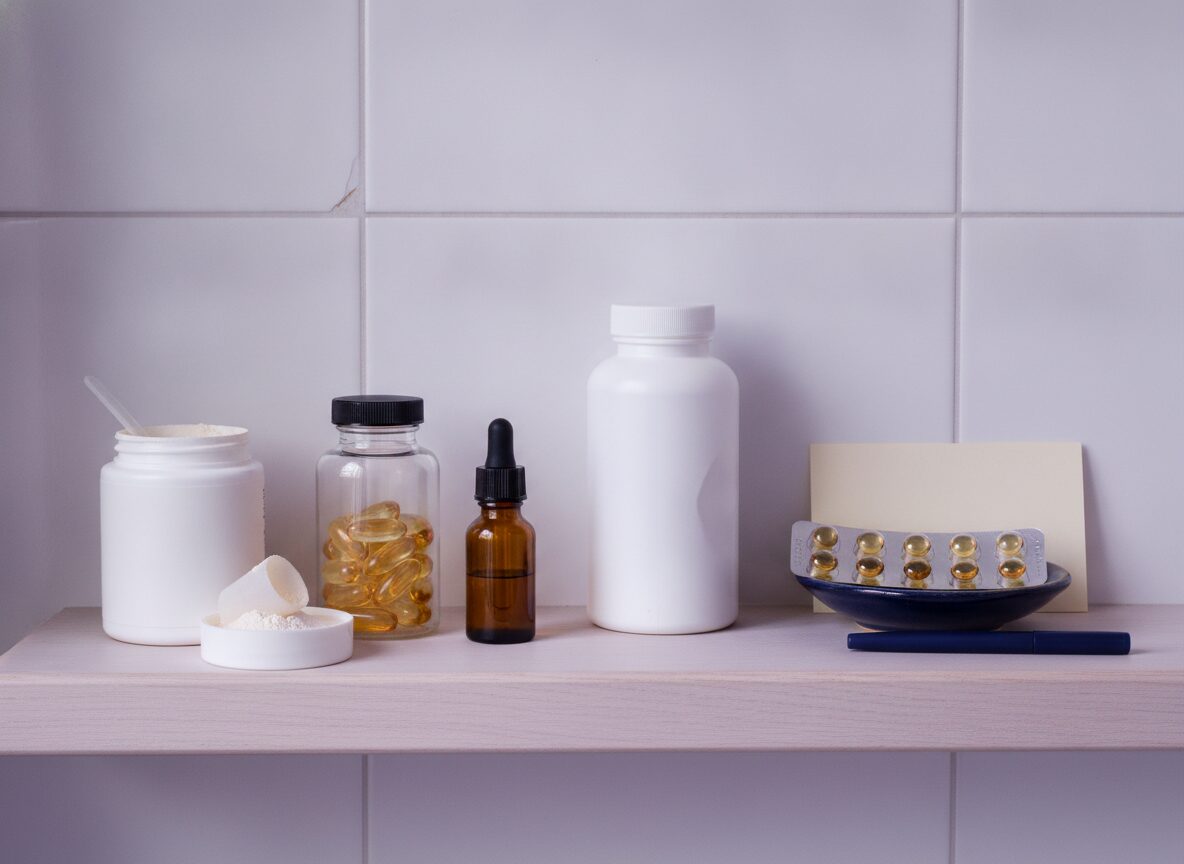
Vitamin A is the one the label names, and the reason answers a question people ask a lot. Why not just take a vitamin A supplement instead of a synthetic version? Because isotretinoin already is a form of vitamin A, at prescription strength. The label describes it as 13-cis-retinoic acid, related to both retinoic acid and retinol. Its drug interactions section says patients should be advised against vitamin supplements containing vitamin A, to avoid additive toxic effects. The American Academy of Dermatology says the same thing in plainer words. Isotretinoin is derived from vitamin A, so a vitamin A supplement can increase the risk of side effects. A plain vitamin A pill wouldn’t replace the drug, and adding one on top stacks the same risk twice.
That rule reaches past the bottle labeled vitamin A. Multivitamins often contain it, and so do some hair, skin and nail formulas, so read the panel on anything you already take. The label names one more herbal product, Saint John’s Wort, for a different reason. It says Saint John’s Wort may weaken hormonal birth control, and pregnancies have been reported in people using both. For anyone counting the pill as one of their two iPledge birth control methods, that matters.
Now the questions the label doesn’t answer. Collagen, vitamin B12 and omega-3 fish oil appear nowhere in the FDA label, the MedlinePlus page or the AAD’s side-effect guidance. That silence isn’t permission, and it isn’t a ban. Nobody has written a rule, so your dermatologist decides for your chart. We won’t tell you whether one gram of omega-3 a day is safe, because no source we’re allowed to cite says so. Tell your doctor and pharmacist every vitamin, supplement and herbal product you take. Don’t start a new one during treatment without asking. List every one of them in your intake, with a photo of each ingredient panel.
Two prescription interactions belong here, because people confuse them with supplements. The label says tetracycline antibiotics should not be taken with Accutane. The combination has been linked to raised pressure inside the skull. Doxycycline and minocycline are tetracyclines, which is why a course of one usually ends before isotretinoin starts. The label also warns that progestin-only birth control pills, the mini-pills, may not work while you take Accutane.
Does smoking weed interfere with Accutane?
The FDA label and the MedlinePlus page don’t mention cannabis at all, so there’s no written rule, and your dermatologist decides. We searched the label for cannabis and marijuana and found nothing. Neither source lists it as an interaction, and neither clears it. Tell your doctor about everything you take, prescription or not, so they can weigh it against your labs and your history. Cannabis belongs on that list, and honest intake answers protect you. The label also names dry eyes, a dry nose and a dry mouth as common side effects. This is a dermatologist conversation, not a program rule.
What else should you avoid while taking Accutane?
Waxing, laser treatments, dermabrasion, unprotected sun, blood donation, and sharing the capsules. The FDA label says to avoid wax hair removal and skin resurfacing procedures, including dermabrasion and laser. That rule runs through treatment and for at least six months afterward. The reason is a higher risk of scarring, and MedlinePlus repeats the same six-month rule. The label tells patients to avoid prolonged exposure to UV rays or sunlight. MedlinePlus adds protective clothing, sunglasses and sunscreen. The label says not to donate blood during treatment and for one month after stopping. The blood might reach a pregnant patient. It also says never to share the capsules with anyone.
The AAD adds a skincare list. It says dermatologists recommend avoiding topical retinol, benzoyl peroxide and sulfur while on isotretinoin. Those ingredients irritate skin that is already more sensitive. It names the ingredients that help instead, such as hyaluronic acid, glycerin, ceramides, squalane and aloe vera. It recommends lip balm with SPF 30 or higher outdoors and petroleum jelly indoors. It suggests saline eye drops for dry eyes. For the nose, it suggests a moisturizing nasal spray or a dab of petroleum jelly inside the nostril. Our page on the skincare routine while on Accutane turns that list into a daily routine. Our guide to the best moisturizer for dry skin on Accutane covers what to buy. Buy the dryness supplies before the dryness starts. The month-two problem we see is never that people don’t know this. They order the balm after their lips have already cracked, then spend a bad week waiting for the box.
How does the monthly pickup actually work?
Every isotretinoin prescription in the United States runs through the FDA’s iPledge program. The label spells out two pickup windows that most patients learn about too late. For patients who can become pregnant, the prescription must be obtained within 7 days of the pregnancy test sample being collected. For patients who cannot become pregnant, it must be obtained within 30 days of the office visit. Each fill is capped at a 30-day supply. Miss the window and the whole monthly cycle restarts, which is the most common first-month surprise we see. If you can become pregnant and you miss that first window before treatment starts, iPledge currently makes you wait at least 19 days from your most recent pregnancy test before you can test again. That wait is removed on November 15, 2026.
The program keeps two clocks running at once. There’s the monthly cycle you’re watching, and there’s the pickup window you’re not. Do not count on a warning: in our experience a window can close without any reminder reaching the patient. Someone has to be watching the dates, and a four-to-five-month course has a lot of dates. Our iPledge program guide walks through the whole thing in plain English. You log in to iPledge yourself, and we track the dates and guide each step.
The last month has its own trap, and it’s where courses quietly end early. People decide they’re basically done, stop tracking the dates, and the final fill dies in its window. A course ends when the last fill is in your hand, not when the mirror looks better. There is one money note as well. Our partner pharmacy runs your insurance and the manufacturer savings program on every fill, then ships the medicine. Big chains often skip the savings program unless someone asks, and that one step changes the number at the counter.
Frequently asked questions
How do you take Accutane?
The FDA label says to take it with a meal and swallow the capsule whole with a full glass of liquid. Never chew or suck on it. Your dermatologist sets the dose and the schedule. Skip a missed dose rather than doubling the next one.
Should you take Accutane with food or on an empty stomach?
With food, for the Accutane brand and the generics that follow its label. The label says a high-fat meal raises how much of the drug you absorb. The Absorica and Absorica LD label says those two brands are taken without regard to meals. Check the name on your box and ask your pharmacist which rule applies.
What should you eat with Accutane?
The label names a meal, and its absorption study used a high-fat one, but it never lists foods or gram counts. MedlinePlus says to continue your normal diet unless your doctor says otherwise. Ask your dermatologist whether a snack like almonds or peanut butter counts for your prescription.
Can you drink milk or eat cheese on Accutane?
The FDA label and MedlinePlus say nothing against dairy. The no-dairy rule belongs to tetracycline antibiotics like doxycycline. If your dermatologist has limited dairy for your acne, follow them, because that’s a judgment about your skin rather than the drug.
Can you take collagen, B12 or omega-3 while on Accutane?
None of the three appears in the FDA label, MedlinePlus or the AAD guidance, so there’s no written rule either way. Vitamin A supplements are the ones the label tells you to avoid. Bring every supplement you take to your dermatologist and let them decide.
What is the best time of day to take Accutane?
The label doesn’t name a time. It ties each dose to a meal, so the best time is the meal you never skip. Morning or night matters less than eating.
The bottom line
How to take Accutane is simple on paper. With a meal, swallowed whole, on the schedule your dermatologist wrote, and never doubled after a miss. The food rule depends on which isotretinoin brand is in your box, and the box is the place to check. Vitamin A and Saint John’s Wort are the two supplements the label names. Everything else on your shelf is a question for the person who prescribed the drug. What derails courses is the pickup window, the two clocks, and the final fill nobody tracks. That calendar is the part we own, and the prescribing stays with your dermatologist.
If you’re ready to find out whether isotretinoin fits you, you can start your consult at thegoalisclear.com/quiz. We serve all 50 states plus Guam. A board-certified dermatologist licensed in your state reviews your history and your answers within 24 hours. They decide whether to prescribe, what to prescribe, and the dose, and a prescription is never guaranteed. Our Concierge then tracks every iPledge date and guides you through each step. Our partner pharmacy fills the prescription, runs your insurance and ships it. Our pricing page lists what the service costs.
BNG Health Services, LLC runs the concierge service and is not the prescribing physician. Every treatment and dosing decision here belongs to a dermatologist.
Sources
- FDA prescribing information, Accutane (isotretinoin) capsules, via DailyMed (NIH): dailymed.nlm.nih.gov/dailymed/drugInfo.cfm?setid=5b524a51-a16b-496e-b764-11c98c479c36
- FDA prescribing information, Absorica and Absorica LD (isotretinoin) capsules, via DailyMed (NIH): dailymed.nlm.nih.gov/dailymed/drugInfo.cfm?setid=3ef0cff8-19c1-4441-b780-fca6c7ee1615
- MedlinePlus (NIH). Isotretinoin: medlineplus.gov/druginfo/meds/a681043.html
- American Academy of Dermatology. Isotretinoin: the truth about safety, side effects, and skin care: aad.org/public/diseases/acne/derm-treat/isotretinoin/side-effects
- Reynolds RV, et al. Guidelines of care for the management of acne vulgaris. J Am Acad Dermatol 2024, via PubMed (NIH): pubmed.ncbi.nlm.nih.gov/38300170
Related from The Goal Is Clear
General information from published sources, not medical advice. Your dermatologist makes every treatment decision after reviewing your case. The Goal Is Clear is operated by BNG Health Services, LLC, which is not the prescribing physician.
← Blog Home