Can You Drink Alcohol on Accutane? What the Label Says
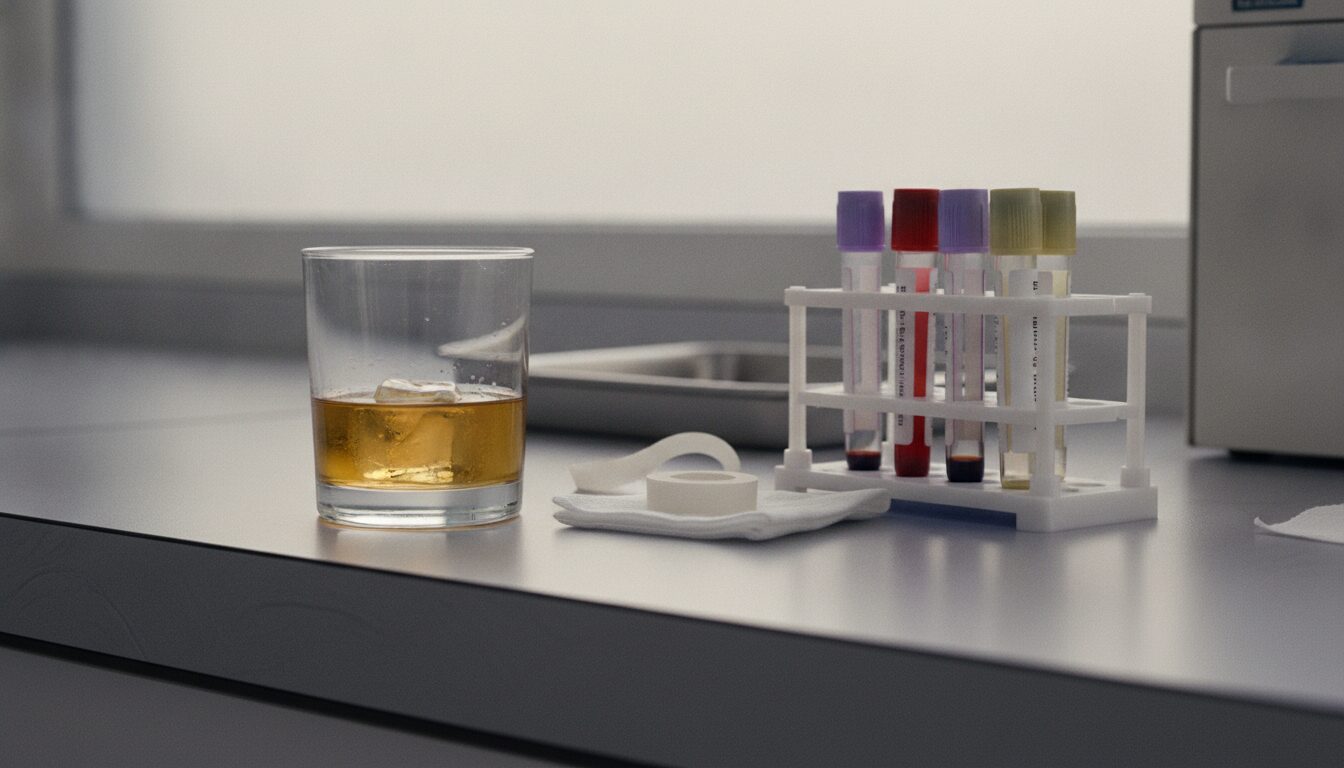
Quick answer: The Accutane® label we checked has no sentence that says whether patients may drink. It does mention alcohol in its blood-fat warnings, and it calls for liver and lipid blood tests during treatment. MedlinePlus tells patients to tell their doctor if they drink or have ever drunk large amounts of alcohol. No source we used gives a safe number of drinks, so the decision belongs to the prescriber who sees your lab results.
This page covers what the Accutane® label, MedlinePlus and the American Academy of Dermatology (AAD) say about triglycerides, liver enzymes, pancreatitis and mood. It also covers what none of them say, because many searches ask about hangovers and drinking limits that the sources we read don’t answer. The label text comes from DailyMed, checked on October 12, 2026.
Can you drink alcohol on isotretinoin?
The sources we read don’t settle it with a rule. We searched the full Accutane® label and Medication Guide on DailyMed for the word alcohol. It appears in the lipid passages and nowhere else that bears on patients. There is no line in either document that bans drinking, and no line that allows it.
That silence is not permission to drink. It means the question gets decided by the person who prescribes the drug and reads your blood tests. If you take a product sold under another name, such as Roaccutane, the label that came with it is the one to read. This article quotes the US Accutane® label and US sources, so another country’s label may be worded differently.
Two things this page won’t do. It won’t invent a number of drinks that counts as safe, and it won’t call alcohol banned or fine. Neither claim appears in the sources.
What does the label say about alcohol and triglycerides?
This is where the label names alcohol as a factor. In its Lipids warning, alcohol appears twice. The first mention says “Some patients have been able to reverse triglyceride elevation by reduction in weight, restriction of dietary fat and alcohol, and reduction in dose while continuing Accutane”. That describes what helped some patients whose triglycerides had risen. It doesn’t say how much alcohol is too much.
The same warning explains why triglycerides matter. It says “Marked elevations of serum triglycerides were reported in approximately 25% of patients receiving Accutane in clinical trials”. The label also says the effects on triglycerides, HDL and cholesterol were reversible after stopping the drug in those trials.
The second mention names who needs the most care. The label says “Especially careful consideration must be given to risk/benefit for patients who may be at high risk during Accutane therapy”. Its parenthetical list reads “patients with diabetes, obesity, increased alcohol intake, lipid metabolism disorder or familial history of lipid metabolism disorder”. For those patients, the label recommends more frequent checks of lipids and/or blood sugar.
The label doesn’t define increased alcohol intake. A prescriber who knows your history is the person who can say whether your drinking falls into that group.
What do the blood tests have to do with drinking?
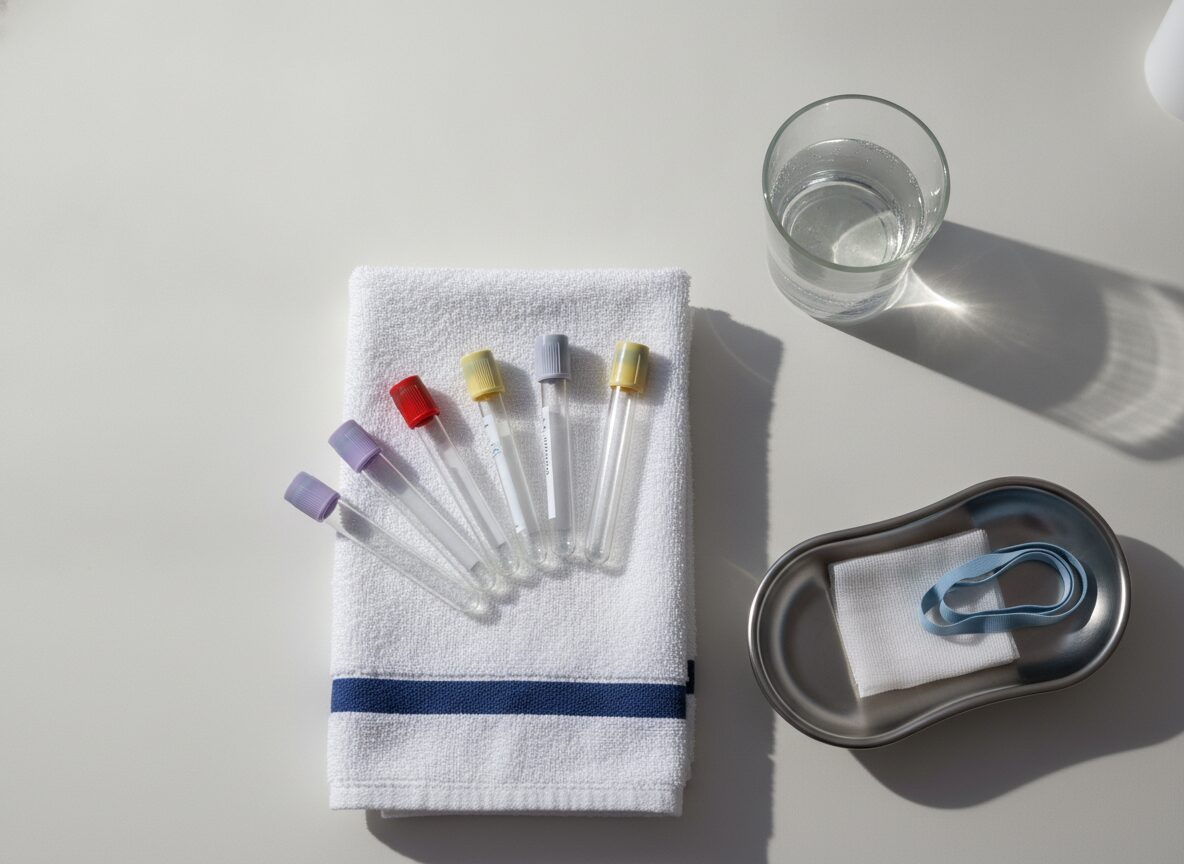
The lipid test has its own alcohol instruction. The label’s Laboratory Tests section says “Pretreatment and follow-up blood lipids should be obtained under fasting conditions”. It adds “After consumption of alcohol, at least 36 hours should elapse before these determinations are made”. So the label asks for at least 36 hours between a drink and a lipid test.
If you drank within 36 hours of a scheduled draw, ask your prescriber or the lab before the draw whether it should move. The label says at least 36 hours should pass after alcohol first, and only they can apply that to your appointment.
Labs are billed separately at The Goal Is Clear, and the Accutane cost FAQ says your dermatologist sets the monitoring schedule. For the rest of the side effect picture, see our Accutane side effects guide.
What does the label say about the liver?
The liver passage does not mention alcohol. It does describe a real risk. The Hepatotoxicity warning says “Clinical hepatitis considered to be possibly or probably related to Accutane therapy has been reported”. It adds that mild to moderate elevations of liver enzymes were seen in approximately 15% of people treated in clinical trials. Some of those normalized with a lower dose or continued treatment.
The label also says what happens next. If normalization does not readily occur or if hepatitis is suspected during treatment, the label says the drug should be discontinued and the cause further investigated. The Laboratory Tests section calls for pretreatment and follow-up liver function tests at weekly or biweekly intervals until the response to Accutane® has been established.
The AAD describes the same monitoring in plain terms. Its isotretinoin side effects page lists liver problems and unhealthy cholesterol levels. It says “your dermatologist will check your cholesterol levels and how your liver is working before you start taking isotretinoin and again while you’re taking it”. The AAD page does not mention alcohol at all.
So the label links alcohol to triglycerides, and links the drug itself to liver enzymes. We found no sentence that says alcohol raises the liver risk on Accutane®, so this article doesn’t claim it. Any added liver effect from drinking is something to ask your prescriber about, with your own enzyme results in front of them.
What does the label say about pancreatitis?
Pancreatitis sits in the same Warnings section as triglycerides. The label says “Acute pancreatitis has been reported in patients with either elevated or normal serum triglyceride levels”. It adds “In rare instances, fatal hemorrhagic pancreatitis has been reported”. Accutane® should be stopped if hypertriglyceridemia can’t be controlled at an acceptable level or if symptoms of pancreatitis occur.
Note the wording: pancreatitis was reported even with normal triglycerides. The label doesn’t tie that to alcohol, so a normal lab result is not a reason to ignore symptoms.
The Medication Guide says certain symptoms may mean the liver, pancreas, bowel or esophagus are being damaged. It says damaged organs may not get better after you stop taking the drug. It tells patients to stop taking Accutane® and call their doctor for severe stomach, chest or bowel pain, trouble or pain when swallowing, or new or worsening heartburn. The Guide gives the same instruction for diarrhea, rectal bleeding, yellowing of the skin or eyes, and dark urine. The Guide does not tie any of these signs to drinking, so stop and call either way.
Does alcohol affect the mood warnings?
The label’s mood warning and its alcohol passages are separate. The prescribing information says “Accutane may cause depression, psychosis and, rarely, suicidal ideation, suicide attempts, suicide, and aggressive and/or violent behaviors”. We found no text in the label, MedlinePlus or the AAD page that connects that risk to drinking, so we don’t say alcohol changes it.
The label does tell prescribers what to watch. Before starting, patients and family members should be asked about any history of psychiatric disorder. At each visit, patients should be assessed for symptoms of depression, mood disturbance, psychosis or aggression. MedlinePlus says you or your family should call your doctor right away if you experience the mood and behavior symptoms it lists.
The practical step is to tell your prescriber about your drinking and your mood in the same conversation. Our Accutane and mental health article goes through the mood warnings in full.
What do MedlinePlus and the AAD add?
MedlinePlus puts alcohol in the list of things to tell your doctor before you start. Its isotretinoin page says “Also tell your doctor if you are overweight or if you drink or have ever drunk large amounts of alcohol”. That sentence sits beside high triglycerides, lipid disorders and heart or liver disease. It asks for your history and sets no limit.
The AAD’s isotretinoin page adds a useful habit. It says to be sure to mention any change in how you feel, even if it seems unrelated to taking isotretinoin. Bring up anything that has changed.
Food and drink questions often come in a bundle. Our guide to foods to avoid while on acne medication covers the diet side. The label’s lipid warning, quoted above, mentions dietary fat and alcohol together.
What can’t any source tell you?
Several popular questions have no answer in the label, MedlinePlus or the AAD pages we read. None of them gives a number of drinks per week, per night or per course. None addresses alcohol tolerance or hangovers on isotretinoin. None says alcohol makes the drug work less well, and none says how long after your last dose drinking becomes a different question.
Websites that state firm answers on these points are going beyond the label. We would rather leave the gap visible than fill it with a guess.
What the sources do support is a short set of habits. Tell your prescriber about your drinking, keep your lab appointments, and ask how drinking fits around your lipid draws. For the organ symptoms listed above, stop taking Accutane® and call your doctor, as the Medication Guide says. Call about any mood changes too.
What if you take doxycycline instead?
We cover doxycycline separately in can you drink alcohol on doxycycline. The Accutane® label also says concomitant treatment with tetracyclines should be avoided. MedlinePlus says doxycycline is a tetracycline antibiotic, so ask your prescriber before combining them.
Where does The Goal Is Clear fit in your plan?
At The Goal Is Clear, every case is reviewed by a U.S. board-certified dermatologist licensed in your state. You take a quiz of about two minutes, upload two photos, and check out through secure billing. A board-certified dermatologist reviews your case within 24 hours, and a prescription is never guaranteed.
Our complete guide to Accutane and isotretinoin covers the full course. Questions about drinking, labs or symptoms go to your dermatologist through the dashboard. The pricing page has the plan details, and some eligible insured patients pay as low as $0 for the prescription, which the pharmacy bills separately. BNG Health Services, LLC operates the brand and is not the prescribing physician.
Common questions about Accutane and alcohol
Can you drink alcohol on Accutane? The Accutane® label has no sentence that bans or allows drinking. It names alcohol in its triglyceride warning, and MedlinePlus asks you to tell your doctor if you drink or have drunk large amounts. Your prescriber decides, using your lab results.
Is one drink okay on Accutane? No source we used gives a safe number of drinks, and none says one drink is fine. Ask your prescriber, who can see your triglycerides and liver enzymes.
Does Accutane damage the liver by itself? The label reports clinical hepatitis possibly or probably related to Accutane® and mild to moderate liver enzyme elevations in approximately 15% of people in clinical trials. That is why it calls for liver function tests during treatment. The label doesn’t say alcohol adds to that risk.
Why does the label mention alcohol and triglycerides? It says some patients reversed triglyceride elevation through weight loss, less dietary fat and alcohol, and a lower dose. It also lists increased alcohol intake among higher-risk factors. The label sets no limit on alcohol.
What if you drank before a blood test? The label says at least 36 hours should pass after alcohol before lipids are measured, and the sample should be taken fasting. If you drank sooner, ask your prescriber or the lab before the draw whether it should move.
What should you take from all this?
The label links alcohol to triglycerides, calls for liver and lipid tests, and warns about hepatitis, pancreatitis and mood changes. It gives no drink count and no rule either way. Bring your drinking history to the prescriber who reads your labs, and let that person set the plan.
If you’d like a board-certified dermatologist to look at your case, take the quiz, which takes about two minutes, and upload two photos. The about page explains who runs the company.
This article is general information, not medical advice. A prescription is never guaranteed, and treatment decisions stay with the board-certified dermatologist who reviews your case. Accutane® is a registered trademark of its respective owner, and isotretinoin is the generic name. The Goal Is Clear is operated by BNG Health Services, LLC, which is not the prescribing physician; board-certified dermatologists prescribe.
Sources
General information from published sources, not medical advice. Your dermatologist makes every treatment decision after reviewing your case. The Goal Is Clear is operated by BNG Health Services, LLC, which is not the prescribing physician.
← Blog Home