Worst side effects of Accutane and when to call your prescriber

What are the worst side effects of Accutane? The FDA Medication Guide for isotretinoin names birth defects, serious mental health problems and raised pressure in the brain. It also lists serious skin reactions, organ damage in the belly, hearing loss, vision problems and severe allergic reactions. It also says exactly what to do for each one. A few symptoms mean emergency care, and many mean stop the medicine and call your prescriber right away. The common dryness means a call if it bothers you or won’t go away.
This page sorts those symptoms into three groups using the label’s own wording, so you know which bucket you’re in before you start guessing. It also covers what gets checked during a course and how to describe a symptom so your prescriber can act on it. Every clinical statement here links to its source. Nothing here replaces your prescriber, and if something feels like an emergency, call 911.
What are the worst side effects of Accutane, according to the FDA?
The worst side effects are the ones the isotretinoin Medication Guide on DailyMed lists under its most important information and serious side effects. Birth defects and pregnancy loss come first, which is why the iPLEDGE REMS exists at all. Serious mental health problems come next, including depression, psychosis and suicidal thoughts.
After those, the guide lists increased pressure in the brain, which it says can lead to permanent vision loss and, in rare cases, death. It lists serious skin reactions, damage to the liver, pancreas, bowel or esophagus, and bone and muscle problems. It also lists hearing loss that may be permanent, vision changes, high blood fats, severe allergic reactions, blood sugar problems and lower blood cell counts.
The same guide calls dry skin, chapped lips, dry eyes and a dry nose the common, less serious side effects. Our full guide to Accutane side effects walks through the whole range, and our low dose side effects page covers what changes on a smaller daily amount. This page is about the decision in the moment, when a symptom shows up and you need to know how fast to act.
Which symptoms mean emergency care or stop and call right away?
The Medication Guide gives one symptom group an emergency instruction and a longer list a stop-and-call instruction. For hives, a swollen face or mouth, or trouble breathing, it says to stop taking isotretinoin and get emergency care right away. Those are the signs of a serious allergic reaction.
MedlinePlus, the NIH’s drug information service, is broader. For its whole list of serious symptoms, it says to stop taking isotretinoin and call your doctor or get emergency medical treatment immediately. That list includes chest pain, trouble breathing, fainting, and a fast or pounding heartbeat. It also includes slow or difficult speech and weakness or numbness on one side of the body.
The Medication Guide says to stop the medicine and call your prescriber right away for these groups of symptoms:
- Mood: sadness, crying spells, lost interest, trouble concentrating, no energy, withdrawing, or any thought of self-harm
- Brain pressure: a bad headache, blurred vision, dizziness, nausea or vomiting, or a seizure
- Skin: red or inflamed eyes, a rash with a fever, blisters, mouth sores, or peeling skin
- Belly: severe stomach, chest or bowel pain, painful swallowing, new heartburn, diarrhea, rectal bleeding, yellow skin or eyes, dark urine
- Muscles, ears and eyes: muscle weakness, worse hearing, ringing in the ears, any vision problem, or painful or constant eye dryness
Pregnancy belongs in this group too. The guide says a patient who gets pregnant, misses an expected period, or has sex without two forms of birth control should stop the medicine and call right away. If mood symptoms are part of what you’re feeling, our page on Accutane and mental health covers what the research shows.
Which symptoms mean call your prescriber soon?
A second group of symptoms gets a “tell your doctor” or “call your doctor” instruction in the Medication Guide, without the words “stop” or “right away” attached. Back pain and joint pain belong in this group, along with a broken bone. So do heavy thirst or peeing a lot, which the guide links to blood sugar problems. A fever, a rash, or red patches or bruises on the legs also fall here, and for those the guide says to stop the medicine and call.
The guide also says to call if you have trouble breathing, faint, or feel weak, which it connects to lower red and white blood cell counts. That’s the same symptom that shows up in the emergency group, so trouble breathing never belongs in the wait-and-see pile. MedlinePlus puts back, bone, joint and muscle pain on its stop-and-call list as well, so the two sources don’t grade every symptom the same way. Where the two sources differ, both of them still tell you to call, so a call is never the wrong move.
Which side effects are expected, and when do they still need a message?
The Medication Guide calls dry skin, chapped lips, dry eyes and a dry nose that may bleed the common, less serious side effects. It still says to call your prescriber about any side effect that bothers you or doesn’t go away. Expected doesn’t mean you’re supposed to sit quietly through it.
Acne can also flare at the start, and the guide says this should last only a short while. It says to talk with your prescriber if the flare is a problem for you. From running the monthly iPledge steps, we see the same timing problem every month two. People with lip balm, moisturizer and eye drops already at home skip the scramble. People who order after their lips crack spend a rough week waiting for a package. For product picks, see our moisturizers for dry skin on Accutane guide.
What about chest heaviness, shortness of breath or brain fog on Accutane?
Chest pain and trouble breathing sit in the most urgent groups in both federal sources. MedlinePlus lists chest pain and trouble breathing among the symptoms that call for stopping isotretinoin and calling your doctor or getting emergency treatment immediately. The Medication Guide lists severe chest pain in its stop-and-call group and trouble breathing in both its emergency and call groups.
Brain fog isn’t a phrase the label uses, but trouble concentrating and feeling like you have no energy are on the guide’s mood list. That list carries the stop-and-call-right-away instruction. So a foggy head that won’t lift is something to report, not something to push through alone.
A normal emergency room workup doesn’t close the loop, either. The guide asks you to call your prescriber about these symptoms, and only your prescriber can decide whether to continue, pause or change your treatment. Tell them about every urgent care or ER stop, what was tested, and what the results were.
What does the label say about dry eyes and meibomian glands?
The label treats eye symptoms as serious, and the research on eye oil glands supports that. The Medication Guide says to stop isotretinoin and call right away for any vision problem or for eye dryness that is painful or constant. The full prescribing information says anyone with visual difficulties should stop treatment and have an eye exam.

The prescribing information also describes corneal opacities, which are cloudy spots on the clear front of the eye. In clinical trials those had either cleared or were clearing 6 to 7 weeks after the drug was stopped. It warns that decreased night vision can start suddenly and has sometimes persisted after treatment ended. The guide adds that contact lenses may be harder to wear during treatment and after it.
Meibomian glands are the oil glands in your eyelids, and they’re the same kind of gland isotretinoin targets in your skin. A 2023 study of 24 patients in Ophthalmology and Therapy measured their eyelid glands before, during and after treatment. Gland loss and oil quality got worse during treatment and improved after it ended, and the authors called the changes reversible.
A 2026 systematic review of 43 articles in Current Eye Research is more cautious. It called dry eye disease a common and potentially serious side effect of isotretinoin. It said the drug may cause lasting gland changes in some patients, though how often and how much that matters is still uncertain. The authors recommend that patients hear about eye risks and get screened for dry eye symptoms before and during treatment.
So if dry eyes already bother you, or dry eye keeps you from starting, say so before the first prescription. The Medication Guide asks you to tell your prescriber about your health conditions before you begin. A Board-Certified dermatologist can weigh that history against your acne, and you can ask whether seeing an eye doctor first makes sense for you.
What gets monitored on Accutane, and how often?
Blood fats and liver tests are the core lab checks, and patients who can get pregnant also get a pregnancy test every month. The prescribing information says blood lipids should be checked before treatment starts and then at intervals until the response settles, which usually happens within 4 weeks. It suggests weekly or every-other-week checks for lipids and liver tests until that response is established. It says about one patient in four on isotretinoin develops high triglycerides.
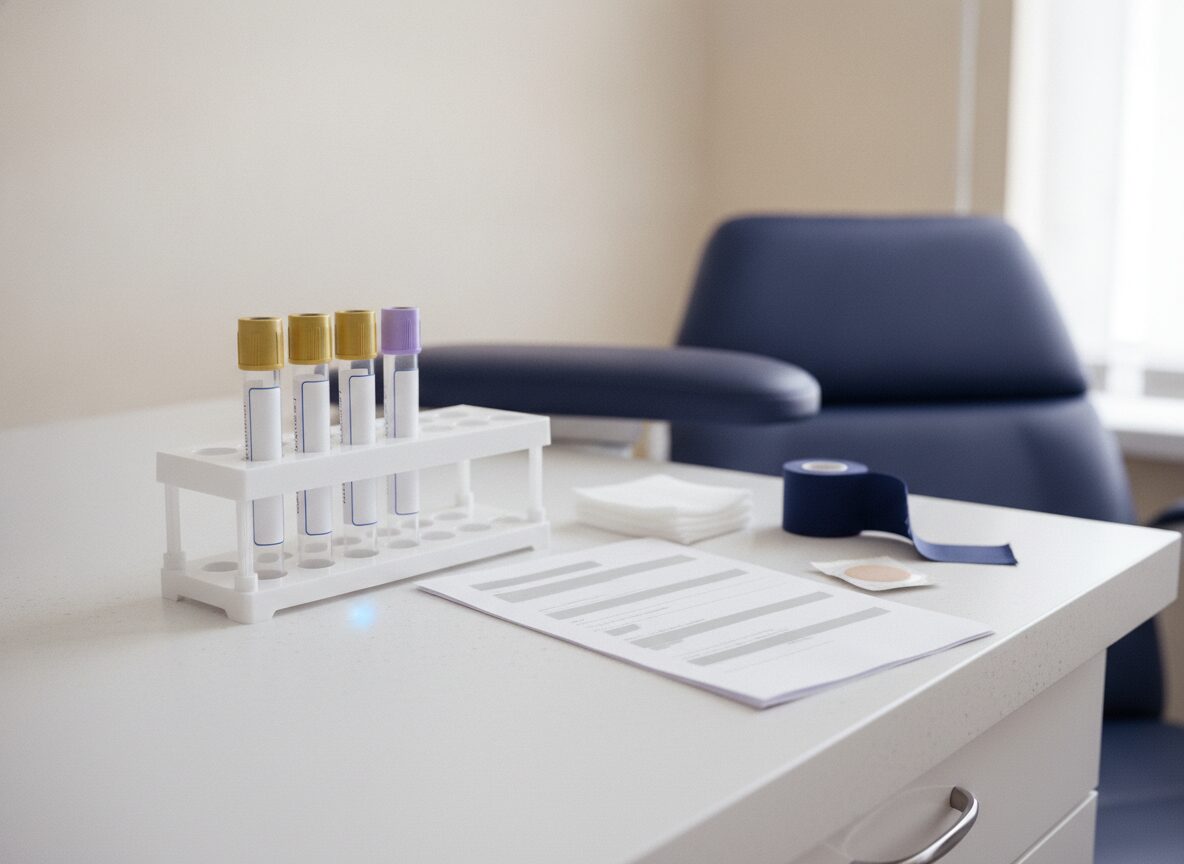
The 2024 American Academy of Dermatology acne guideline takes a lighter approach to lab work. Its remark says prescribers should consider monitoring liver tests and lipids, and it says complete blood count monitoring isn’t needed in healthy patients. The label adds that people with diabetes, obesity, heavy drinking or a family history of lipid problems may need more frequent lipid or blood sugar checks.
Labs are only part of the monitoring, because the label also asks for attention to mood, vision and hearing. The Medication Guide says you get no more than a 30-day supply at a time and should talk with your prescriber about side effects each month. That monthly conversation only helps if you bring every symptom into it.
On the logistics side, lab work trips people up more than the tests do. The lab order is a separate document from the prescription. People regularly arrive at the draw site with the wrong paper or a photo of the wrong page. Pregnancy test results don’t flow into iPledge on their own either, because the prescriber enters them, so someone has to confirm the result reached the prescriber. A draw booked early leaves time to redo a lost or damaged sample.
How do you report a side effect so your prescriber can act?
A report gets acted on when it’s specific, dated and complete enough to judge without a back-and-forth. Your prescriber reads your message without seeing you, so the words carry the whole picture. Include these five things every time:
- The symptom in plain words, and how bad it is on a scale of 1 to 10
- The date it started and whether it’s getting better, worse or holding steady
- Your current daily dose and any recent dose change
- Any urgent care or ER stop, with what they tested and found
- Every other medicine, vitamin or supplement you take right now
The dose line matters because the Medication Guide says your dose is based on your body weight and may change during treatment. The supplement line matters because the guide warns about vitamin A supplements, tetracycline antibiotics, some birth control pills and St. John’s Wort. Our page on how to take Accutane covers those interactions in more detail.
The iPledge monthly questions repeat word for word, and we see people stop reading them closely around month three. Treat your side effect answers as new each month, even when last month’s answer was “none”. You can also report a side effect straight to the FDA through MedWatch or by calling 1-800-FDA-1088, which the Medication Guide lists.
Frequently asked questions
What are the worst side effects of Accutane for most people?
The Medication Guide names birth defects, serious mental health problems, brain pressure, serious skin and organ problems, hearing and vision loss, and severe allergic reactions. It gives a clear action for each one, from emergency care to a call to your prescriber.
Should I stop taking Accutane if I have chest pain?
MedlinePlus says to stop taking isotretinoin and call your doctor or get emergency medical treatment immediately for chest pain. The Medication Guide lists severe chest pain among its stop-and-call symptoms. If the pain feels like an emergency, call 911.
Can Accutane cause permanent dry eyes?
A 2026 systematic review said isotretinoin may cause lasting eyelid gland changes in some patients, and it called the long-term extent uncertain. A 2023 study found the gland changes improved after treatment ended. The label says to stop and call right away for painful or constant eye dryness.
What blood tests do you need on Accutane?
The prescribing information calls for lipid and liver tests before treatment and at intervals afterward. Patients who can get pregnant also take a pregnancy test each month, as our iPledge program guide explains.
Is brain fog one of the worst side effects of Accutane?
The label doesn’t use the words brain fog. It does list trouble concentrating and low energy as possible signs of depression, and it says to stop the medicine and call your prescriber right away if they appear.
Where The Goal Is Clear fits, and where it doesn’t
The Goal Is Clear is a service company, not a medical provider, and it doesn’t monitor symptoms, diagnose anything or decide your dose. Every call on this page about stopping, continuing or changing treatment belongs to your prescriber, and emergency symptoms belong to emergency care. What we do is the logistics side of an isotretinoin course, meaning the iPledge dates and pharmacy steps plus the lab paperwork that sits around the medical care.
If you’re weighing whether to start, you can start your consult. A Board-Certified dermatologist reviews your history within 24 hours and decides whether isotretinoin fits you. We serve all 50 states plus Guam.
This article is general information, not medical advice. Whether isotretinoin is right for you, and at what dose, is a decision for your prescriber, and a prescription is never guaranteed. The Goal Is Clear is operated by BNG Health Services, LLC, which is not the prescribing physician.
Sources
- FDA-approved Medication Guide, Isotretinoin Capsules USP, via DailyMed (NIH), revised 6/2024: dailymed.nlm.nih.gov/dailymed/medguide.cfm?setid=0114567b-3bac-490d-b9eb-03a6c5d90935
- Prescribing information, Isotretinoin Capsules USP, via DailyMed (NIH): dailymed.nlm.nih.gov/dailymed/drugInfo.cfm?setid=0114567b-3bac-490d-b9eb-03a6c5d90935
- MedlinePlus (NIH). Isotretinoin: medlineplus.gov/druginfo/meds/a681043.html
- Reynolds RV, et al. Guidelines of care for the management of acne vulgaris. J Am Acad Dermatol 2024;90(5):1006.e1-1006.e30, doi 10.1016/j.jaad.2023.12.017 (PMID 38300170)
- Zakrzewska A, et al. The Effect of Oral Isotretinoin Therapy on Meibomian Gland Characteristics in Patients with Acne Vulgaris. Ophthalmol Ther 2023;12(4):2187, doi 10.1007/s40123-023-00737-6 (PMC10287853)
- Fineide FA, et al. Isotretinoin and Dry Eye Disease: A Systematic Review. Curr Eye Res 2026, doi 10.1080/02713683.2026.2713384 (PMID 42554012)
- FDA. MedWatch: The FDA Safety Information and Adverse Event Reporting Program: fda.gov/safety/medwatch-fda-safety-information-and-adverse-event-reporting-program
Related from The Goal Is Clear
General information from published sources, not medical advice. Your dermatologist makes every treatment decision after reviewing your case. The Goal Is Clear is operated by BNG Health Services, LLC, which is not the prescribing physician.
← Blog Home